


Introduction: The Emerging AI tools for interior designers.
The last ten years have witnessed a tremendous change in interior design, with technology still playing a role in the planning, visualization, and implementation of spaces. By 2026, AI tools for interior designers are transforming how professionals plan, visualize, and present interior spaces. AI-driven applications help practitioners to come up with design concepts, draw lifelike images, break down spatial designs, and plan projects better.
In the conventional way, interior design involved a lot of involvement of manual planning, sketching and coordination before a design idea could be tabled to the clients. Although creativity and artistic vision continue to play a central role in the profession, the contemporary AI technologies have come to the rescue by making the technical work processes easier and design processes faster. These aids can be used to make conceptual ideas come out into their visual format to enable easier interpretation of the designs proposed to the designers and their clients alike.
Professional training of interior design is also adopting AI tools for interior designers in training programs. The students and those who envision becoming designers are being taught to incorporate intelligent software in their designs to enhance the accuracy level, productivity, and interaction. Explaining the most powerful best AI Tools for Interior Designe to work with interior design will allow professionals to remain competitive in the industry, which quickly shifts toward the usage of the new technologies.
Incorporating the creativity of human beings with hi-tech gadgets, interior designers can create more customized and creative spaces. The AI technology will help a designer to analyze design options, experiment with designs and create realistic presentations that improve the decision-making process.
Best AI Tools for Interior Design Visualization.
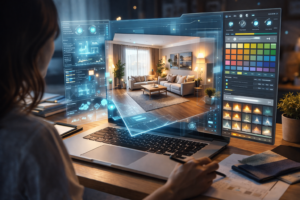
The tool of visualization is essential in the interior design as customers frequently require viewing the image of a space before the process of building or adorning the area can commence. AI-supported visualization software can guide designers to translate a design idea into the final detailed digital form. The input to these tools includes room dimensions, furniture styles and colours, and with this information, these tools are able to generate a realistic view of the interior spaces.
Designers are now able to generate competing ideas through visualization tools that are run by AI, thus allowing them to create hundreds of design variants in a short period of time. This enables them to test out various layouts and styles without taking hours to develop the firsthand drawings in manual format. Such digital images facilitate clients comprehending the way in which the furniture would be laid out and the lighting and textures of a finished area.
The current visualization technologies also have advanced rendering features stimulating natural light, shadows and reflections. These are the realistic effects that allow the designers to present true design concepts that are nearly close to the actual design output. Consequently, AI-driven visualization tools have turned into a mandatory tool in the hands of interior designers eager to express themselves.
Artificial Intelligence in Interior Design Space Planning.
One of the most significant elements of interior design is space planning. Designers have to properly plan the furniture, decorations and utilities so that they can be utilized to their fullest capacity without overcrowding and still look good. The use of AI tools has brought new possibilities of space arrangement and providing the best layout.
Space planning systems based on AI consider the size of the rooms, their movement dynamics, and the functions needed in them to suggest furniture placement and layout alternatives. These systems refer to design algorithms to compute effective spatial assignments that enhance comfort and accessibility.
These tools help interior designers to see the various layout options within a short period of time. Rather than manually testing every combination, AI software can suggest something and leave it up to the designer to tailor it to his or her aesthetic tastes. This integration of computer automation and human design enables designers to be able to create balanced and realistic interior designs.
AI Tools for Interior Designers in Lighting and Material Selection.
The 3D modelling is a vital proficiency for interior designers who wish they could show elaborate designs. The 3D modelling tools that have been developed through AI tools for interior designers enable a designer to create a virtual representation of a room or a building in a very precise fashion.
These devices help to produce a piece of furniture, wall, and ornamentation that could be projected in the digital environment. The use of artificial intelligence in the industry can result in automatic modulation of the proportions and positions of objects depending on the measurements of the room, meaning that there will be no errors during the whole designing procedure.
Besides the modelling structures, AI systems have the capability of using textures, materials, and colours on surfaces in a realistic manner. Designers are able to test out various flooring, wall covering and furniture materials to see the way they interplay in the space. This flexibility enables the designers to be creative in what they are designing, keeping in mind that the design must be practical.
Another job of the 3D modelling tools is to also assist the interior designers to work in a better connection with architects, contractors and clients. Through the use of digital models, project team members are able to review the designs and provide recommendations on how they might be changed prior to the construction start.
Artificial Intelligence Tools in the Selection of Furniture and Decoration.
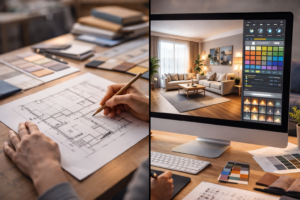
The selection of the furniture and the decor items is also an important aspect of interior design. Artificial intelligence technologies can now suggest furniture line styles, colours, and decorations that one wishes a designer to suggest about their idea.
The systems process huge design databases and extract combinations that suit certain themes or preferences. The parameters that can be entered by designers through the parameters include room style, colour scheme, and budget considerations, and the AI Tools for Interior Designers provides appropriate design suggestions.
The use of AI in the selection of furniture as well makes design trends and products new to designers. These tools give inspiration by examining trends in the global design and the preferences of the people that might not be immediately emanated through conventional research measures.
The final design choices will be the prerogative of the designer, but the recommendations that AI would generate are useful hints that increase the range of choices in design.
Lighting design tools based on AI.
Lighting design is a crucial factor in determining the mood and functionality of interior places. Adequate lighting improves visual comfort, accentuates the effects on architecture, and brings uniqueness to the general ambiance of a room.
The AI-based lighting design systems are used to model various lighting scenarios to demonstrate the way that natural and artificial light will interplay in an environment. Such systems consider the location of the windows, the orientation of the room, and the materials used inside the room to determine the lighting behaviour of the day.
These insights allow interior designers to figure out the best location of light fixtures, lamps, and decorative lighting features. With the help of AI-generated simulations, there is a means of guaranteeing that space is well-lit but in an aesthetic manner.
Using the lighting parameters in the software, the designers can play with different lighting styles and see how each one of them will affect the future design.
Artificial Intelligence in Colour and Material.
The choice of colour and materials has a great impact on the nature and personality of an interior space. The AI-based design tools can also help designers to choose colour palettes and materials that can be opposed to one another visually.
These systems study the principles of design like contrast, color harmony and balance to suggest combinations that can fit in the general theme of a project. Designers are able to explore various colour choices on the wall, floor and furniture finishes, and the AI offers suggestions that ensure visual consistency.
Artificial intelligence in interior design applications are also used in the assessment of the way various materials will look when under the special conditions of light. The feature enables designers to have an idea of how the textures and colours would appear in real settings instead of basing their designs on mere theoretical concepts.
Digitization of material interactions can aid designers in making prudent choices prior to application in real-life areas.
AI Systems to Introduce Virtual Clients.
Part of interior design projects is the communication with clients. The designers should be able to articulate their concepts in such a way that the clients can interpret the given design and give their criticism. This communication is augmented with Artificial intelligence in Interior Design that build immersive visual experiences in the form of presentation tools.
Online presentation software enables designers to display interior space by walking through the space in a virtual environment. Clients are able to look at online images of rooms, see furniture setup and see the general feel in the design.
Such presentations give clients a clear picture of the end result as compared to the use of drawings or sketches. Through this, the design discussions are more productive and clients are able to make decisions with more confidence.
The use of AI technology also enables designers to make changes in the design aspects swiftly in the course of presentations. Any alteration of colours, furniture, or materials can be presented in real-time so that a client sees the impact of one or another option on the composition of the entire design.
Artificial Intelligence Project Planning and Workflow Management.
Design work on the interior design is usually associated with the coordination of various parties such as designers, contractors, suppliers and clients. The project management tools that are powered by AI help with the organization of the tasks, timeline, and resources involved in the design process.
These systems derive project needs and produce timetables to assist the designers in dealing with deadlines and deliverables. Artificial intelligence devices will be able to monitor the developments of the projects, detect potential delays, and propose changes to keep work at the planned level of efficiency.
Automation of administrative tasks gives the designer more time to dedicate to works of creativity. Planning tools assisted with AI help to keep the projects under control and make communication within the team clear and effective.
The effective project management will lead to easier implementation of the design and assist in ensuring the professionalism of the complex interior design work.
Artificial Intelligence in Sustainable Interior Design.
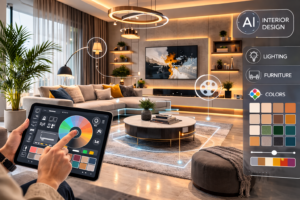
The idea of sustainability is currently valued in interior design. The desire of many designers is to achieve space that is not harmful to the environment and still remains comfortable and aesthetic. Best AI tools for interior design facilitate sustainable design practice in terms of energy efficiency, materials consumption, and environmental performance.
Sustainability tools that are generated by AI consider natural lighting, ventilation, and insulation to prescribe constructive solutions that would help to ensure the building is environmentally friendly. These systems assist the designers to choose materials and layouts that are more energy efficient and less effective in creating waste.
These observations can guide interior designers to create designs that can be used in achieving the goals of sustainability without sacrificing the aestheticism and functionality of the designs.
The Future of best AI tools for interior design.
This is because the application of artificial intelligence in interior design is expected to increase with the increased evolution of technology. Even more sophisticated best AI tools for interior design could be used in the future, like automatic generation of design, better virtual reality environments, and increased integration with architectural systems.
As new technologies are released, interior designers can be expected to choose new workflow systems that merge professional creativity and clever software assistance. Reading between the lines of AI-generated insights and putting them into practice in a considered manner would be a valuable professional skill.
The designers should be receptive to studying additional tools because of this; they will be better able to keep up with technology. Using AI in the design processes, professionals will be able to enhance efficiency, become more creative and provide more innovative solutions to their clients.
Conclusion
Artificial intelligence in interior design is a reinforced resource of contemporary interior design, and it entails the means of visualization, space planning, material selection, light layout, and project management. These technologies help designers to develop creative ideas more effectively and at the same time they are accurate and professional.
By using modern AI tools for interior designers, professionals can improve creativity, accuracy, and project efficiency. The designers capable of integrating the creative vision together with advanced digital tools will be able to build more engaging and useful environments.
Since the design industry keeps changing, the knowledge of best AI Tools for Interior Design should probably become one of the mandatory skills of an interior designer. Through adopting such technologies in conjunction with, albeit, good design, practitioners can still be able to create innovative and significant interior space.
Disclaimer
The article is not aimed at any other purposes other than informing and educating. It addresses broad tendencies and the technology of artificial intelligence in the field of interior design; it is not a piece of professional design advice or a list of which software to use.
- Individuals interested in AI tools as elements of professional endeavours are advised to perform their research.
- They should seek the guidance of design experts or software distributors before arriving at any conclusions.
- This is important in regard to interior design actions or the use of technology.
Frequently Asked Questions (FAQs)
1. What are best AI tools for interior design?
Best AI tools in interior design are software applications that use artificial intelligence to assist designers in planning layouts, creating visualizations, selecting colors and materials, and managing projects. These tools analyze data and design patterns to help professionals develop efficient and visually appealing interior spaces.
2. How do AI tools help interior designers?
AI tools for interior designers help automating repetitive tasks such as layout planning, 3D modeling, and lighting simulations. They allow designers to experiment with multiple design ideas quickly, improve accuracy in measurements, and create realistic visual presentations for clients.
3. Can beginners use best AI tools for interior design?
Yes, Many Best AI tools for interior designers allow designers to create realistic visual presentations. Students and aspiring designers can use these tools to learn space planning, experiment with color schemes, and visualize design concepts without needing advanced technical skills.
4. Are AI tools replacing interior designers?
No, AI tools are not replacing interior designers. Instead, they support designers by handling technical tasks and generating design suggestions. Creativity, aesthetic judgment, and understanding of client needs still depend on human designers.
5. What types of AI tools for interior designers are commonly used in interior design?
Interior designers commonly use Artificial intelligence in interior design for visualization, 3D modeling, space planning, lighting design, color and material selection, furniture recommendations, and project management.
6. How does AI improve space planning in interior design?
AI space-planning tools analyze room dimensions, movement patterns, and functional needs to suggest efficient furniture layouts and spatial arrangements. This helps designers optimize available space while maintaining comfort and aesthetics.
7. Why is AI visualization important in interior design projects?
AI Tools for Interior Designers allows them to create realistic digital images of interior spaces before construction or decoration begins. These visual previews help clients understand the design concept more clearly and make better decisions.
8. Can AI tools help with lighting design in interiors?
Yes, AI lighting design tools simulate natural and artificial lighting conditions in a room. They analyze window placement, room orientation, and materials to recommend the most effective lighting arrangements.
9. Do Artificial intelligence in Interior Design assist in choosing colors and materials?
AI-powered design software can analyze color harmony, contrast, and design trends to suggest suitable color palettes and materials. Designers can test different combinations digitally before finalizing their selections.
10. What is the future of AI tools for interior designers in interior design?
The future of Artificial intelligence in interior design includes advanced design automation, improved virtual reality experiences, intelligent space planning systems, and better collaboration tools for designers, architects, and clients.