


Introduction: How Stitching Training course for Fashion Designers
Designer The worldwide fashion sector is valued over $1.7 trillion, according to statistics from Statista, and it continues to increase every year. Fashion designing stitching training is the foundation for anyone who wants to become a professional designer in the modern fashion industry. From premium couture labels to small stores and internet apparel startups, the need for professional fashion designers has never been stronger. But behind every good garment designer is one essential foundation: sewing instruction.
Many ambitious designers concentrate entirely on creativity—sketching dazzling costumes, planning runway presentations, and dreaming of founding their own brands. However, the truth is different. True fashion expertise comes with knowing cloth, stitching, seams, and structure. Stitching in fashion designing course with stitching training instruction blends raw imagination into skilled artistry.
Whether you are a student after 12th grade, a housewife wishing to open a store, or someone planning a fashion job transition in 2026, fashion designing stitching training is your first step toward becoming a professional designer.
Understanding Fashion Designing Stitching Training
When you learn fashion designing stiching training; you follow a formalized approach to create clothing that works based on their design and using sewing techniques.
What is Stitching in Fashion Designing course with stitching training?
Stitching is the most fundamental technique for making clothing. In fashion designing stitching traing ,it encompasses all the ways you finish a garment including hand and machine sewing (including hand sewing), finishing seams, hemming, pleating, gathering zippers, collars, and sleeves.
Difference Between Tailoring and Fashion Designing
If a designer does not have the proper skills in these areas, then nothing will ever fit right or look good. This is where Tailoring and Fashion Design differ.which is why many students choose a fashion designing course with stitching training to understand both aspects properly.
Fashion designers are creating clothing from the idea through sketching to getting all the fabrics they need to make their Clothing, Learning all the details to create the clothing, which is why a stitching course for fashion designers plays an important role in developing these practical skills.
The difference is Tailoring is primarily the process of creating the right size of clothing based on your size and measurements. Fashion Design includes everything else after the way to create the right size of clothing. Life is about the way to create the design by thoughts, collecting fabrics, sketching, creating, collecting patterns, has a Brand and Marketing themselves, and this complete process is often taught in a fashion designing course with stitching training.
By learning to sew you connect both worlds; as designers understand how to sew, they are in control of all the quality and fit and finishing; these are the unique qualities that will allow a designer to differentiate between themselves, the professionals will do what they do because they understand both, which is why many professionals recommend a stitching course for fashion designers.
Why Technical Skills Matter in Creative Fields
Technical skills are important in Creative Fields. Without the technical side of sewing you become worthless; For many of beginners they have the best idea of what they want to create and it can be frustrating not to get it out as they see it in their heads but learning to sew will bridge that gap creating the confidence and experience seen at the end of the creation process are all posslbe on a designer’s part.
Why Stitching course for fashion designers is the First Step to Becoming a Professional Designer
A good designer must grasp how clothing are made from inception.
Importance of Fabric Knowledge
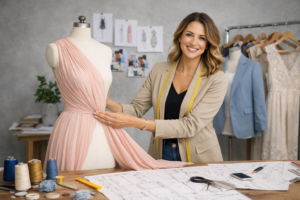
Different textiles react differently. Silk drapes gracefully, denim is robust, chiffon is delicate, and knit stretches. Stitching instruction explains how to treat each cloth appropriately.
Learning Measurements & Pattern Making
Accurate measurements guarantee optimal fit. Pattern creation translates body measurements into paper templates that guide garment production. According to the Council of Fashion Designers of America (CFDA), pattern accuracy greatly effects final garment quality.
Understanding Garment Construction
From bodice to sleeve attachment, garment construction is sequential. Beginners learn step-by-step construction techniques, acquiring technical confidence.
Volunteer Status: Form the Base
Everybody started out as an amateur at some point.
Primary Supplies and Equipment
Students are taught how to use measuring tapes, scissors, needles, thread, chalk, rulers, and sewing machines. Tool comprehension is essential when constructing products.
Hand Techniques of Stitching
The four basic stitches are:
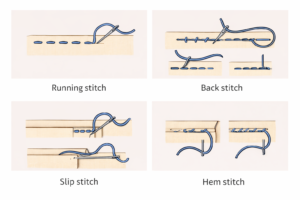
- A running stitch
- A back stitch
- A slip stitch
- A hem stitch
The above-mentioned stitches are the unit of measure used for constructing every type of garment on the market today.
Introduction to a Sewing Machine in stitching course for fashion designers
Students are taught how to fill a bobbin, sew, adjust the length of stitches, and repair mistakes. According to Sewing.org, knowing how to use a sewing machine will help reduce mistakes by 40% when stitching garments.
First Projects for Practice
Common starter projects:
Cushion coverings
Aprons Simple skirts Basic shirts
These initiatives increase trust and precision.
Building Professional Skills at the Intermediate Level
At this point, students progress from basic garments to more elaborate outfits in fashion designing stitching training.
The Difference Between Pattern Making And Draping
Pattern making is where you will create paper patterns using the measurements of a person’s body, while draping is when you will physically construct a garment directly on a mannequin using the different types of fabric you want to use, which is an important skill taught in fashion designing stitching training.
Organizations such as the Parsons School of Design really value draping as a major creative tool, and it is also widely included in fashion designing stitching training programs.
Creating Women, Men, And Children Garments
You will learn:
Kurtis
Blouses
Shirts
Pants/Bottoms
Children Frocks
What Is The Importance Of Fit And Alterations
Having the correct fit can make one brand of clothing the ultimate in luxury, versus clothing made for mass production. If you are trained to alter a garment properly, you will have guarantee the shopper’s happiness.
The Fundamentals of Fashion Illustration
When a designer creates fashion illustrations (drawings) to convey their thoughts, this process will include drawing and sewing during the intermediate level.
For a Student to be fully prepared for a career that fully utilizes their skillset, they will need to have Advanced Level Training.
Couture Techniques – Techniques used include very detailed Hand Finishing, Hand Embroidery, Beading, and Precision Sewing Techniques.
Industrial Sewing & Production – Assembly line production methods used in industrial manufacturing. McKinsey (the consulting firm) indicates that successful global brands are efficient and act with speed.
Portfolio Development
– Portfolio includes technical sewing specifications, creative sketches, fabric samples, completed garments.

Internship
Internship & Industry Exposure – Practical experience enhances your knowledge of the fashion industry. Many students secure internships in boutiques, department stores and/or fashion houses during school.
Tools, Technologies & New Developments in Stitching
The merging of tradition and technology in the Fashion designing stiching training industry of 2026.
Fashion Design Using CAD
CAD for Fashion Design allows digital patterns to be made. This will improve accuracy while allowing for quicker creations of new designs than using traditional methods.
Smart and Eco-Friendly Textiles
Sustainability is growing rapidly. Circular fashion is predicted to be the future of the industry according to the Ellen MacArthur Foundation.
Artificial Intelligence & Automation in The Fashion Industry
AI can help identify new trends and streamline the manufacturing process. However, sewing ability is still required in order to ensure the final product meets quality expectations.
Job Options Post Sewing Course
Various Career Routes Available
Fashion Designing stiching training
Fashion Designer – Develop unique creations and collaborate with both brands and aesthetic companies.
Boutique Owner – Establish your brand/label with custom tailored garments.
Pattern Creator – Focus on technical garment design.
Costumer – Work within Film/TV to create unique characters for the industry.
Production Supervisor – Manage a garment factory.
Salary Expectations & Growth in 2026
According to Glassdoor, Junior Fashion Designers have great salaries and earning potential based on skills & experience.
Freelancers and boutique owners’ income can vary widely depending on their clientele.
Countries such as India, USA, UK & UAE are all experiencing an extreme increase in access to professional stiching course for fashion designers, as well as growing demand for fashion designing stitching training.
Selecting an appropriate fashion designing course with stitching training is very important.
You have three options for course selection; Certificated, Diploma and Degree:
Certificate: 3-6 months
Diploma: 1 year
Degree: 3-4 years
Look for specific modules taught in the curriculum; Pattern-Making, Garment Construction, Fashion Illustration, CAD and Practical or Internship.
Practical experience develops your knowledge into practical use, which results in greater expertise.
Institutions that provide placement assistance will create more career opportunities.
Case Studies & Success Stories
A number of high-end stiching course for fashion designers learnt how to sew before they began their careers. For instance, Coco Chanel had basic sewing skills before she established a worldwide fashion company.
Many local boutique owners started with a few sewing classes and then turned their craft business into a business that earns them lakhs per month.
Conclusion
Stitching course for fashion designers goes beyond just the technical aspect; it is a critical part of a future successful fashion career and is often included in a fashion designing course with stitching training. Learning about different types of fabrics, mastering couture techniques, etc. are some of the many ways that stitching can turn a creative idea into an actual garment.
As technology continues to change how we create and sell clothing in 2026 and beyond, creating garments from start to finish using sewing as the primary form of construction will still be just as important. If you want to become a professional fashion designer, you need to consider a fashion designing course with stitching training, because stitching course for fashion designers builds the practical skills required in the industry. Starting your journey with fashion designing stitching training can help transform creative ideas into professional garments.