

Full Stack Development Career: Is Full Stack Development the Right Career for You? Complete Guide
AI SUMMARY
Full Stack Development is one of the most in-demand and future-proof tech careers in 2026. A full stack developer builds both frontend and backend systems, making them highly valuable to companies, startups, and remote teams. This career does not require a computer science degree—skills, real-world projects, and problem-solving ability matter most. With consistent learning, beginners can become job-ready within 6–9 months. Salaries range from ₹4–8 LPA for freshers in India and go up to ₹20+ LPA with experience, while global remote roles offer even higher pay. AI tools enhance developer productivity but do not replace full stack developers, making this a stable and scalable long-term career choice.
Introduction
Choosing a career today is more confusing than ever. Technology is evolving fast, AI is everywhere, and students often hear mixed opinions about which skills will actually lead to a stable and high-paying job.

Among all tech careers, Full Stack Development stands out as one of the most talked-about options. You may have heard that full stack developers earn well, get jobs easily, and even work remotely for global companies. But at the same time, you may also wonder:
-
-
Is full stack development hard?
-
Can a beginner or non-technical student learn it?
-
Is it safe with AI growing so fast?
-
Is it really worth investing time and money?
This complete guide answers all those questions honestly and clearly.
Whether you are a student after 12th, a college graduate, a working professional, or someone planning a career switch, this guide will help you decide if full stack development is the right career for you or not.
What Is Full Stack Development?
Full stack development refers to building both the frontend and backend of a web or software application.
In simple words, a full stack developer knows how to:
-
Design what users see
-
Build how systems work behind the scenes
-
Connect everything into one complete working product
Frontend vs Backend vs Full Stack
Frontend Development
This is the visual part of a website or app. It includes layouts, buttons, forms, and animations. Technologies include HTML, CSS, JavaScript, and frameworks like React.
Backend Development
This is the logic part. It handles servers, databases, authentication, and APIs. Technologies include Node.js, Python, Java, PHP, and databases like MySQL or MongoDB.
Full Stack Development
A full stack developer combines both frontend and backend skills and understands how data flows through the entire system.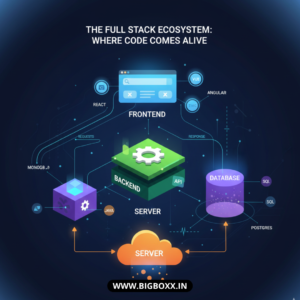
What Does a Full Stack Developer Do Daily?
A full stack developer may:
-
Design user interfaces
-
Write server-side logic
-
Create and manage databases
-
Fix bugs across frontend and backend
-
Deploy applications to cloud servers
-
Work with designers and product teams
This versatility is why companies love full stack developers.
Many students choose a professional full stack developer course to learn frontend and backend development in a structured manner and prepare confidently for high-paying tech jobs in full stack development career.
Why Full Stack Development Career Is in High Demand
The demand for full stack developers has increased sharply over the last few years, and this trend continues in 2026.
Why Companies Prefer Full Stack Developers
Companies prefer full stack developers because:
-
They reduce dependency on multiple specialists
-
They understand the complete product
-
They can solve problems faster
-
They are cost-effective for startups
Especially startups and mid-size companies prefer hiring developers who can handle end-to-end development.
Job Market Trends
According to global tech hiring trends – full stack developer jobs :
-
Software development jobs continue to grow every year
-
Full stack roles appear consistently in top tech job listings
-
Remote hiring has expanded global opportunities
This makes full stack development a globally relevant skill.
Skills Required to Become a Full Stack Developer
Frontend Skills
-
-
HTML5 and CSS3
-
JavaScript fundamentals

-
-
React or similar frameworks
-
Responsive design
Backend Skills
-
Server-side programming (Node.js, Python, Java)
-
-
REST APIs
-
Authentication and authorization
-
Databases (SQL & NoSQL)
Tools & Platforms
-
Git and GitHub
-
Cloud basics (AWS, hosting)
-
Deployment and debugging
Soft Skills That Matter
Many people ignore this, but soft skills are critical:
-
Logical thinking
-
Problem-solving
-
Communication
-
Willingness to learn continuously
If you want to learn these skills in a practical and job-focused way, enrolling in a full stack development course in Chandigarh can help you gain real industry experience through live projects and expert guidance.
Is Full Stack Development Hard for Beginners?
Short answer: No, if learned properly.
The Reality of Learning Full Stack Development
Full stack development feels difficult at the start because everything is new. But once you understand the basics, learning becomes easier because many concepts repeat.
Most beginners struggle only in the first few weeks.
Can Non-Technical Students Learn It?
Yes. Many successful developers come from:
-
Commerce background
-
Arts background
-
Mechanical or civil engineering
Coding is a skill, not a talent you are born with.
Can You Become a Full Stack Developer Without a Degree?
Yes, absolutely.
Today, companies focus on:
-
Skills
-
Projects
-
GitHub profiles
-
Problem-solving ability
Degrees matter far less than your ability to build real applications.
Many developers without computer science degrees are working in top companies and earning high salaries.
How Long Does It Take to Become Job-Ready?
The timeline depends on consistency.
-
3 months: Basics and small projects
-
6 months: Job-ready for entry-level roles
-
9–12 months: Strong profile with confidence
Daily practice of 3–5 hours is enough.
Full Stack Developer Salary in India and Abroad
Salary in India
-
Freshers: ₹4–8 LPA
-
2–4 years experience: ₹8–15 LPA
-
Senior developers: ₹20+ LPA
Global & Remote Salary
-
Remote roles: ₹20–40 LPA
-
US jobs: $90,000–150,000 per year
Freelancing Income
Freelancers can earn ₹1–3 lakh per month depending on skills and clients.
Full Stack Development career vs Other Careers
Full Stack vs Data Science
Full stack has more entry-level jobs and is easier for beginners.
Full Stack vs Digital Marketing
Digital marketing is easier to start, but full stack offers higher long-term growth.
Full Stack vs AI/ML
AI/ML is more math-heavy, while full stack focuses on building products.
Freelancing, Remote Work & Startups as Full Stack Development Career
Full stack developers can:
-
Work remotely for international companies
-
Freelance on global platforms
-
Build startups or SaaS products
-
Create multiple income streams
Few careers offer this level of flexibility.
Is Full Stack Development is Future-Proof with AI?
Yes.
AI tools help developers:
-
Write code faster
-
Debug efficiently
-
Improve productivity
But AI cannot replace:
-
System thinking
-
Architecture decisions
-
Business logic understanding
Full stack development remains safe and relevant. Full-Stack Automation Course: The Best IT Course After 12th for Future-Proof Careers
Who Should Choose Full Stack Development?
-
Students after 12th
-
College graduates
-
Career switchers
-
Freelancers
-
Startup founders
If you enjoy building things and solving problems, this career is for you.
A well-designed full stack development course in Chandigarh not only teaches coding but also focuses on projects, problem-solving, and career readiness for today’s tech industry.
Step-by-Step Roadmap to Start Full Stack Development
-
Learn HTML, CSS, JavaScript
-
Choose a stack (MERN recommended)
-
Build real projects
-
Create GitHub portfolio
-
Apply for internships and jobs
Pros and Cons of Full Stack Development Career
Pros
-
High salary
-
Global demand
-
Remote work
-
Freelancing options
Cons
-
Continuous learning required
-
Initial learning curve
Final Verdict – Is Full Stack Development Career Right for You?
If you want a career that offers growth, stability, global opportunities, and flexibility, full stack development is one of the best choices you can make in 2026 and beyond.
Choosing the right full stack developer course can make your learning journey smoother by providing step-by-step training, hands-on practice, and placement-oriented skills.
Frequently Asked Questions (FAQs)
Q1. Is full stack development good for beginners?
Yes, full stack development is an excellent option for beginners when learned in a structured and practical way. A well-designed full stack development course helps beginners understand frontend and backend concepts step by step, without overwhelming them. With regular practice, real-world projects, and proper mentorship, even students with no prior coding experience can confidently build applications and prepare for entry-level developer roles.
Q2. Can I learn full stack development after 12th?
Yes, many students start learning full stack development right after 12th and build successful careers in the IT industry. By joining a professional full stack development course, students can gain job-oriented skills such as web development, database management, and backend logic. Starting early allows students to enter the job market faster without depending only on traditional degree programs.
Q3. Is a degree required to become a full stack developer?
No, a degree is not mandatory to become a full stack developer. Most companies today focus more on practical skills, project experience, and problem-solving ability rather than formal education. If you can build real applications, maintain a strong portfolio, and demonstrate your understanding of frontend and backend technologies, you can secure good job opportunities even without a computer science degree.
Q4. How much can a full stack developer earn?
A full stack developer’s salary depends on skills, experience, and location. In India, freshers typically earn between ₹4–8 LPA, while developers with experience can earn ₹12–25 LPA or more. Freelancers and remote developers often earn higher by working with international clients. Continuous learning and hands-on project experience play a major role in long-term income growth.
Q5. Is AI a threat to full stack developers?
No, AI is not a threat to full stack developers. Instead, AI tools help developers work faster by assisting with coding, debugging, and testing. However, AI cannot replace human creativity, system design, and real-world problem-solving skills. Developers who understand application architecture and business logic will remain in high demand, even as AI continues to evolve.
Q6. Which stack should beginners learn first?
The MERN stack (MongoDB, Express, React, and Node.js) is considered the best option for beginners. It is widely used in the industry, has a strong community, and offers plenty of job opportunities. Learning the MERN stack helps beginners understand both frontend and backend development using JavaScript, making the learning process smoother and more practical for real-world projects.
